Home moisture
What should you record before asking about window condensation?
Record where window moisture appears, when it returns and what else is happening in the home before asking for a window or ventilation assessment.
Published Oct 30, 2026 · Updated Oct 30, 2026
How can you prepare a window-moisture brief?
- 1Identify the room and window, and describe where the moisture is visible without guessing its cause.
- 2Take a context photo and close-up from a safe position; note the date, time and weather.
- 3Record available room temperature and relative-humidity readings, plus relevant household activities.
- 4List existing ventilation equipment, its operating status and any recent window or building work.
- 5Share the brief and ask what the assessment includes, who can investigate the suspected issue and what needs prompt attention.
Why does the location of the moisture matter?
“The window is wet” is a useful starting observation, but it leaves the person answering your call with several possibilities. Describe whether water is on the room-facing glass, around the frame, on the sill or apparently between panes. If you cannot tell, say so. Include whether nearby wall finishes are wet or marked. Keep an active leak or visibly damaged material prominent in the request instead of waiting to complete several days of notes.
Natural Resources Canada explains that indoor moisture can condense on cooler surfaces, particularly as outdoor conditions get colder or indoor humidity rises. Its guidance distinguishes surface condensation from moisture between glass panes associated with a broken seal. That distinction is a reason to document the location, not to diagnose a failed unit from a phone photo. Ask the assessor how they will establish where the water is and what evidence supports the proposed next step.
- NRCan distinguishes moisture on glass, frames and sashes from moisture between glass panes.
- Health Canada recommends addressing the moisture source and seeking professional help when the source or corrective action is unclear.
What photos and notes will make the first call useful?
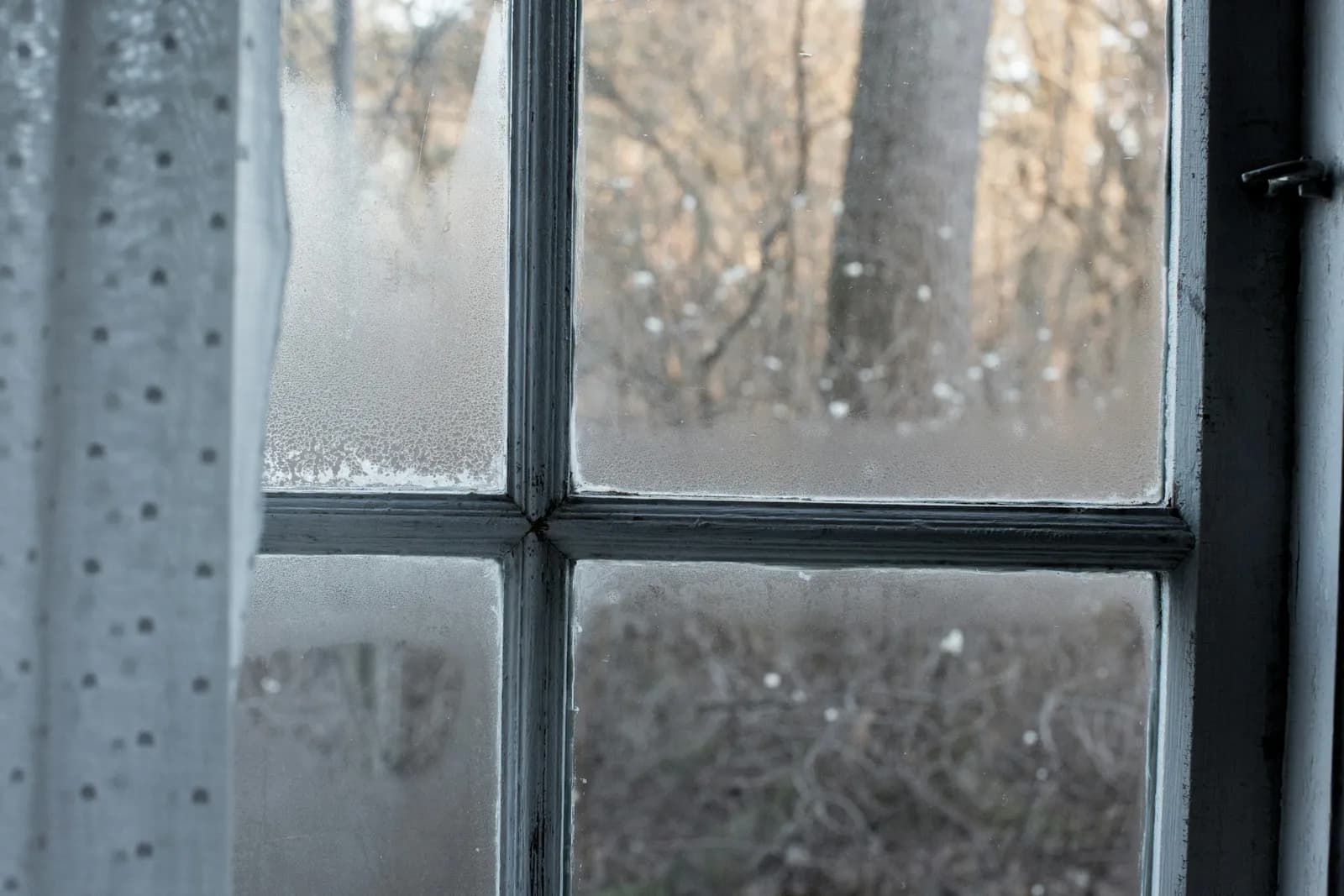
Take one photograph showing the whole window and its surrounding wall, followed by a closer view of the affected area. Use a room name and a simple window label in your message so the contractor can connect the images to your description. Avoid a collection of tight close-ups with no explanation of where they were taken. Stay on the floor or another normal safe viewing position; an exterior photograph is not worth climbing or leaning out to obtain.
Add the time you noticed the moisture, whether it cleared later, and whether the same pattern has appeared before. Note observed weather such as a cold morning or recent rain without claiming a connection you have not established. If you already have a room thermometer or hygrometer, include its temperature and relative-humidity reading with the time and measurement location. These are observations for the assessment, not a pass-or-fail test of the window or proof of a hidden defect.
Which household conditions should you mention?
List the conditions someone visiting at another time might miss. Was the room occupied overnight? Had the household recently showered, cooked or dried laundry indoors? Were window coverings closed? Note which exhaust fans or whole-home ventilation equipment were operating, if you know. “Bathroom fan switched on; performance not checked” is more precise than “ventilation is fine.” Also mention recent work, a newly occupied room or a changed household routine, while leaving the cause open.
NRCan notes that curtains, deep sills and nearby furniture can affect air movement at a window. Health Canada’s moisture guidance also discusses humidity measurement and allowing warm air to reach the glass. Give the assessor that context rather than prescribing a universal equipment change. If you have an HRV or another ventilation system, find its model information and operating instructions for the discussion. Do not adjust unfamiliar service settings, obstruct heating equipment or disable ventilation to experiment with the result.
Who should assess the problem before you compare repairs?
Ask the business whether it investigates the type of moisture issue you have described. A window company can discuss glazing, frames and its installation work; an HVAC contractor can discuss the ventilation and equipment within its scope. An unclear moisture source or damage extending beyond the window may need someone experienced in building-moisture investigation. Describe the pattern first and ask who is appropriate, rather than requesting a specific replacement part before anyone has assessed it.
Health Canada describes a professional moisture assessment as an investigation that identifies sources and proposes an action plan. Use the first conversation to clarify what the visit includes: the areas examined, any measurements, a written explanation of findings and the next decision. If the business proposes work, ask how that recommendation follows from what was found and what remains uncertain. A directory category is a way to find contacts; confirm the individual business’s assessment services and qualifications directly.
What does a useful window-moisture brief look like?
The following is an invented organizational example, not a diagnosis or a real customer case. “Bedroom, window B: droplets visible on the room-facing lower glass early in the morning. Wider and close-up photos attached. The glass looked clearer by afternoon. Curtains were closed overnight. We do not know the room humidity or whether the same condition occurs outside. No assessment has been completed.” This makes the information you have, and the information you do not have, easy to distinguish.
Add the question you want the visit to resolve: “Can you assess the likely moisture source and explain whether the next step concerns the window, ventilation or another part of the building?” If you have noticed staining, damaged finishes, persistent wetness or a musty smell, include that instead of treating the example as a complete checklist. Health Canada advises correcting moisture problems and addressing mould concerns; use its current guidance and appropriate professional help for that situation.
Keep the original observations beside the contractor’s findings. If a repair is recommended, request a scope identifying the problem addressed, proposed work, exclusions and any follow-up needed to judge the result. Compare assessment with assessment, and a repair proposal with the same repair scope. A replacement quote and a diagnostic visit answer different questions. Clear records help you choose the next step without turning an initial suspicion into an agreed explanation.
What else should you ask about wet windows?
Does condensation mean the whole window needs replacing?
It does not establish that on its own. Ask where the moisture is forming and what the assessment found about the window and room conditions. Have the contractor explain why the proposed work addresses that finding, including whether the recommendation concerns glazing, another component or conditions elsewhere in the home.
Can moisture on the outside of the glass be normal?
NRCan notes that exterior condensation can form around sunrise after a cool, calm night when the air is humid, including on high-performance glazing. Record the location and timing rather than assuming every exterior droplet is a defect. If you are uncertain about its location or pattern, ask for an assessment.
Should I wait for another cold morning before calling?
Use the photos and observations already available to make the first inquiry. You can ask whether another observation would help, but do not postpone an active leak or damaged-material concern to complete a diary. Explain ongoing wetness and damage clearly so the person contacted can advise on the appropriate response.
Can a photo confirm mould or a failed glass seal?
A photo can show the area you are concerned about, but it leaves questions about location, material condition and the moisture source. Describe what you see and ask what inspection is needed. Follow Health Canada’s guidance for suspected mould; avoid naming a contaminant or failed component as a confirmed finding yourself.
Editorial and safety note
This guide summarizes public sources for planning and comparison. Rules, restriction stages, program funding, contacts, and emergency conditions can change. Verify current instructions with the responsible authority before acting.