Renovation planning
What should you agree about renovation dust before work starts?
Agree where dusty work happens, how the household will use the home, and who handles cleanup before your renovation begins.
Published Oct 28, 2026 · Updated Oct 28, 2026
What should be agreed before the first dusty task?
- 1List the tasks and materials that could produce dust, including any unresolved material assessment.
- 2Ask the contractor to describe the work area, access routes and controls for those tasks.
- 3Agree who prepares the rooms, checks the arrangement and handles daily and final cleanup.
- 4Record when dusty tasks will happen and how household routines will change.
- 5Review the plan again if the scope, materials, work location or household arrangements change.
What belongs in a renovation dust plan?
A promise to tidy up leaves several practical questions unanswered. Before accepting the work arrangements, ask the contractor to identify the tasks likely to create dust and where each will happen. Include cutting new trim, sanding, drilling and any proposed removal of existing finishes. Describe the rooms that remain in everyday use and the routes people normally take through the house. This is a discussion about the actual project, rather than a request for a generic statement that the crew will be careful.
Health Canada identifies renovation activities such as cutting and sanding wood as indoor sources of fine particles. Its household renovation guidance also discusses separating the work area and cleaning after the project. Use that guidance to frame questions for your contractor, then record the proposed method and the person responsible. A homeowner checklist does not design a containment system, identify a hazardous material or establish that a room is ready for occupation. Those questions need the appropriate project-specific assessment.
- Cutting and sanding can produce particles; ask how the contractor will reduce dust at the task.
- Settled particles can be disturbed by some cleaning methods; agree how cleanup will be carried out.
How will the work area fit around everyday life?
Walk through the proposed arrangement together before furniture is moved. Ask where tools and materials will be stored, which doorway the crew will use, how debris leaves the home and where household members can spend time away from the work. A simple annotated room sketch can make the discussion clearer. Keep a separate list of practical needs such as reaching a bathroom, receiving a delivery or accessing a room used for remote work. Ask the contractor to explain how those needs fit the work sequence.
Distinguish protecting a surface from controlling airborne dust. A covered counter can help illustrate preparation, but a photograph of plastic sheeting does not show that a whole work area is properly controlled. Ask the contractor what separation is proposed and who checks it during the job. If the arrangement affects heating, ventilation, doors or access, have the responsible professional review that interaction. Do not improvise changes to operating building systems from a picture or an online checklist.
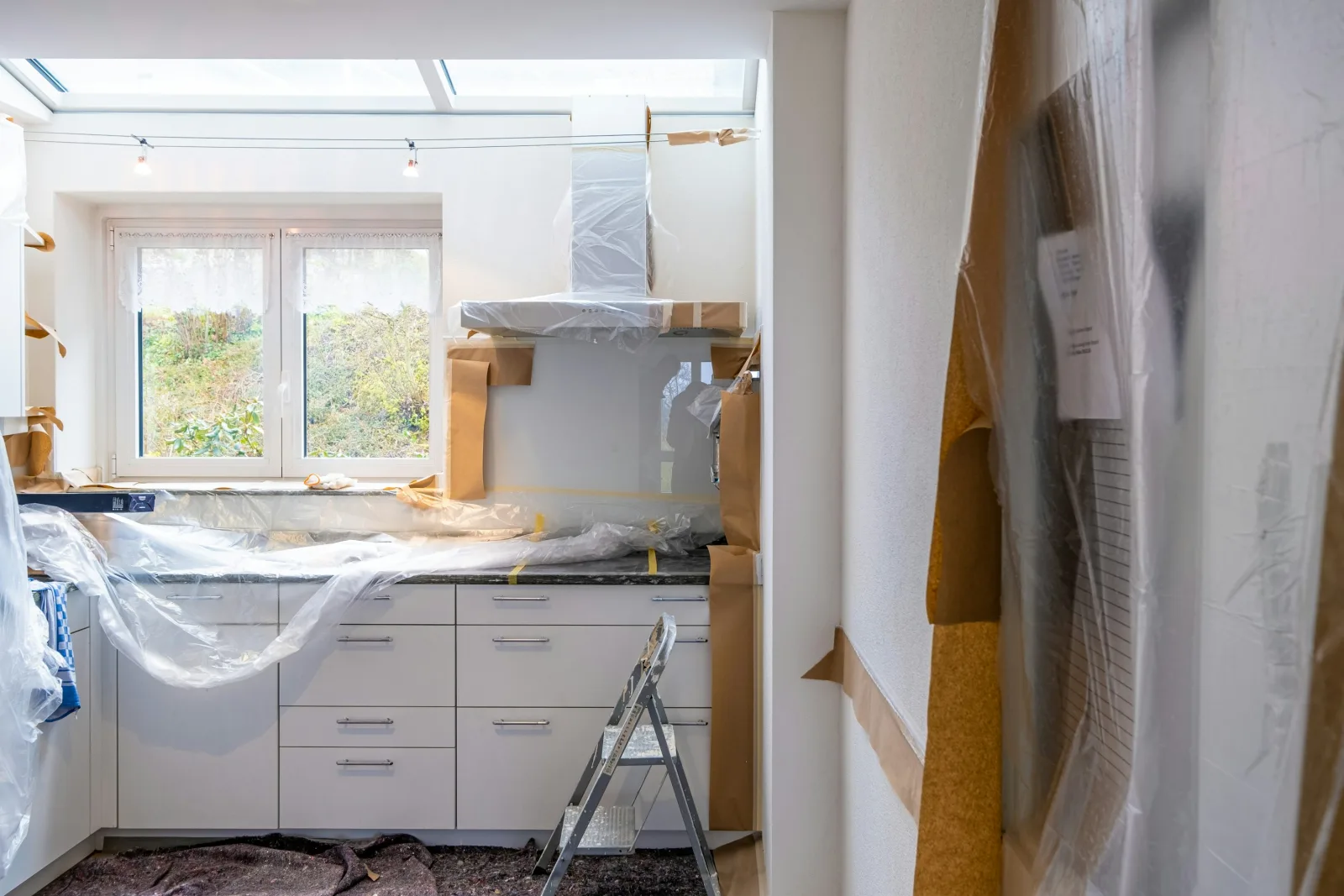
What should happen when the work or materials change?
The plan should follow the tasks, not just the calendar. Ask when cutting, sanding or other dusty stages are expected, who will tell the household before they begin and how the crew will handle a task moved to another room. Health Canada suggests moving dusty renovation work outdoors where practical. Ask whether that is suitable for this job and what arrangements would be needed; do not assume an outdoor location removes every concern or is available at every property.
Unexpected material is a separate decision. Health Canada advises avoiding disturbance of suspected asbestos materials and consulting a professional about testing when a renovation may affect them. Do not ask a crew to continue on the strength of ordinary dust precautions while that question is unresolved. Record the affected location, the question raised, who will assess it and the next decision needed. This guide gives no sampling, removal or hazardous-material cleanup instructions. Keep the assessment separate from the ordinary preparation and housekeeping list.
Who is responsible for cleanup and the end of each workday?
Agree what the crew will leave ready at the end of a normal day and what happens only at the end of the project. The Canadian Home Builders’ Association recommends discussing disruption and the level of cleanup with the renovator. Turn that conversation into concrete scope: who removes ordinary debris, which surfaces are included, where supplies are kept and who checks the shared access route. Identify owner tasks separately so neither side assumes the other is handling them. Do not quietly add cleanup to an unrelated trade’s work.
For ordinary household renovation cleanup, Health Canada describes damp cleaning of hard surfaces and using a HEPA-filtered vacuum where possible. That advice is not a method for handling unidentified or hazardous debris. Have the contractor identify the appropriate process for the materials involved. Ask how ventilation and any product instructions will be addressed before normal use resumes. A visibly tidy room, a lack of noticeable odour or the passage of a set number of hours does not replace the relevant professional assessment or product directions.
What could a written agreement look like?
Here is a constructed planning example, not a real project or a technical specification. An owner is arranging installation of new interior trim beside a dining area that the household normally uses every evening. The useful record names the work location, the proposed cutting location, the room-preparation tasks and the person who coordinates the crew. Instead of saying “minimal mess”, it lists which household arrangements need an answer before the work starts. No dust-free outcome, equipment performance or suitability to occupy is assumed.
Example DP-01: Work: prepare and install new dining-area trim. Contractor to confirm: where cutting takes place, the proposed controls, setup and checking responsibilities, the planned work window and how ordinary debris is handled. Owner to confirm: items to move and the household’s alternative eating arrangement. Open questions: interaction with shared access, ventilation and any unexpected existing material. Daily review: a named contact tells the owner what work is planned next and records a changed arrangement before the next affected task.
Keep the record with the accepted scope and update it when the assumptions change. If the contractor cannot yet explain an item, mark it pending rather than filling the gap with a guess. This planning sheet is useful when comparing proposals because it makes responsibilities visible. It does not establish compliance, change the contract’s approval process or replace specialist advice. For a broader scope change, use a separate renovation change record so price, timing and the dust arrangements remain connected without being confused.
What else should homeowners ask about renovation dust?
Can an air purifier replace the agreed work-area controls?
Treat a portable air cleaner as a question for the project plan, not a substitute for it. Health Canada describes air cleaning as a supplement to reducing sources and improving ventilation. Ask the responsible contractor or professional what is appropriate for the actual tasks and building.
Does plastic over furniture show that dust is contained?
It shows that those surfaces have been covered. It does not, by itself, explain how particles from a task are controlled or how the rest of the home will be used. Ask for the intended work-area arrangement, checking responsibilities and cleanup method rather than treating a covering as proof.
What if someone discovers suspect material after work starts?
Keep that discovery separate from ordinary housekeeping. Ask the responsible contractor to identify the affected work and obtain the appropriate professional assessment before the suspect material is disturbed further. Do not collect a sample or attempt removal based on this checklist. Record who will provide the next instruction.
Can the household return to a room as soon as it looks clean?
Ask the responsible professional what conditions and product instructions apply to the work that was done. Appearance alone does not answer every material, ventilation or occupancy question. Agree how the contractor will communicate the next step; avoid assuming that one fixed waiting period suits every renovation.
Editorial and safety note
This guide summarizes public sources for planning and comparison. Rules, restriction stages, program funding, contacts, and emergency conditions can change. Verify current instructions with the responsible authority before acting.